


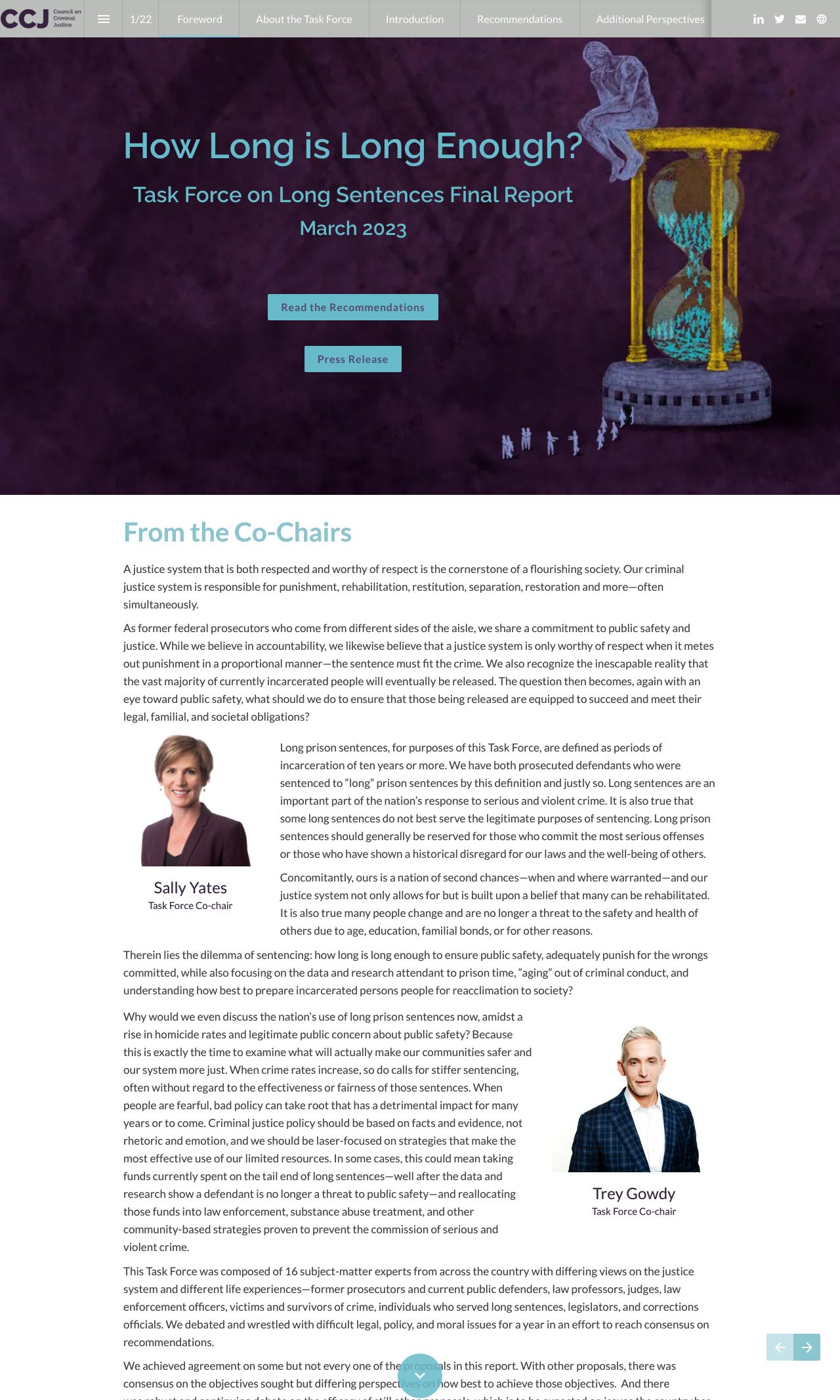
LINK How Long is Long Enough? Task Force on Long Sentences Final Report
The Council on Criminal Justice’s Task Force on Long Sentences was composed of 16 subject-matter experts from across the country with differing views on the justice system and different life experiences—former prosecutors and current public defenders, law professors, judges, law enforcement officers, victims and survivors of crime, individuals who served long sentences, legislators, and corrections officials. This report presents the Task Force’s final recommendations:
- Prioritize funding for violence reduction and victim and survivor services
- Guarantee access to services for all victims and survivors of serious and violent crime
- Reduce recidivism by addressing behavioral health needs of people serving long sentences
- Promote accountability and enhance access to services through the enforcement of victims’ rights
- Identify and alleviate unwarranted racial disparities in sentencing
- Ensure that judges may consider relevant facts and circumstances when imposing long sentences
- Decouple drug quantity from sentence lengths and restrict the use of long sentences in cases that stem from symptoms of substance use and mental health disorders
- Ensure that sentencing enhancements based on criminal history are focused on individualized assessments of risk
- Provide restorative justice opportunities for victims, survivors, and people serving long sentences
- Prioritize professionalized assessments of rehabilitation and present danger to public safety in parole decision-making
- Maximize rehabilitation by expanding earned sentence credit opportunities
- Promote accountability and rehabilitation through selective second look opportunities
- Provide people serving long sentences with access to rehabilitative living conditions and opportunities
- Improve the nation’s understanding of the use of long sentences with more data, greater transparency, and a focus on clear costs and benefits